
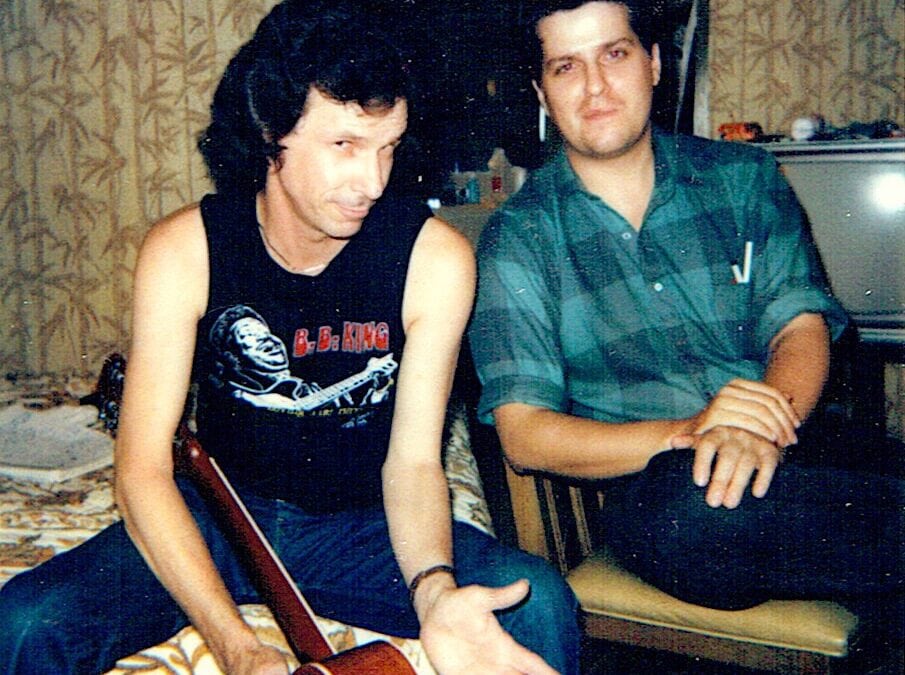
(Gary Stewart and Jimmy McDonough. Photo by Carole Nicksin)
“Life ain’t worth living if it don’t get out of hand sometime.”
–Gary Stewart
I waited twenty-four years to interview the preeminent biographer, Jimmy McDonough. I followed his work like Captain Willard floating up the river through the heart of darkness to find Colonel Kurtz in Apocalypse Now. The wait is over. On Thursday–May 21–McDonough agreed to an interview. I called McDonough at his home in Portland, Oregon, to discuss his hard-boiled career and latest biography, Gary Stewart: I Am from the Honky Tonks, a revelatory work that took almost forty years to complete. Published last month, I Am from the Honky Tonks provides compelling evidence, among other disturbing facts, that Gary Stewart’s induction into the Country Music Hall of Fame remains at least two decades late. It’s a masterpiece.
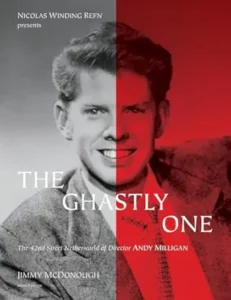
Over the years, I’ve read and examined McDonough’s books with wonder–starting with Shakey, his undisputed work on Neil Young. Between Shakey and I Am From the Honky Tonks, McDonough wrote well-researched, soulful and evocative biographies on an eclectic range of creatives: The Ghastly One (Andy Milligan), Big Bosoms and Square Jaws (Russ Meyer), Tragic Country Queen (Tammy Wynette), Soul Survivor (Al Green), The Exotic Ones (The Ormond Family) and The Most Exotic One (Georgette Dante). McDonough once said, “The artists I write about–chaos, craziness and catastrophe are the order of the day.” True enough.
Shakey set me on McDonough’s trail in 2002, and at first, I was unaware of the book’s treacherous backstory. After cooperating with McDonough, Neil Young refused to allow Shakey ‘s publication, and McDonough was forced to sue the ‘Godfather of Grunge’ for almost two million bucks. This grueling legal battle dragged on for a couple of years, while the finished manuscript lingered in publishing purgatory. In the end, Mr. Young relented, and Shakey was published, selling truckloads of copies and earning cult status as the definitive biography on Young.
In fact, all of McDonough’s books count as definitive works on their respective subjects–from Russ Meyer to Al Green. Well-read copies of all McDonough’s tomes should reside on every music and film lover’s bookshelf. McDonough’s literary style is that of a highly intelligent gangster–he asks for no quarter and gives none. He’s also flat-out hilarious.
In this Q & A, we discuss McDonough’s books, writing, the modern publishing industry, Jimmy Scott, Bob Dylan, eerie realities of AI, his brutal style, Gary Stewart and future projects. I’ve conducted many interviews over the last thirty-five years, but the “Kamikaze Biographer” stands as a timeless favorite. After the interview, turning off the recorder, I asked McDonough for advice regarding book dilemmas I’m enduring. Who better to ask? He listened politely, and asked questions. He dispensed sage advice in true Jimmy-style for which I am eternally grateful. McDonough also told me: “James, you have to be ruthless.”
James Calemine: Jimmy, thanks for talking to me. This morning I listened to your Estus Pirkle interview that included his Atlanta Halloween sermon. Fantastic work.
Jimmy McDonough: Estus will jolt you into readiness for the day (laughs).
I’ve been waiting to interview you for 24 years. I have a lot of questions.
JM: Go for it. Whatever you want to know.
You wrote in your Andy Milligan book, The Ghastly One: “I had just gotten my union card and was working as a sound editor for the likes of Brian De Palma and Sidney Lumet, but I found the world of big-budget films as exciting as a shoe factory.” So, I want to start in 1987. You already knew Andy, you’re working for Andy. You have his story, but at the same time the Ormond Family book (The Exotic Ones) seed had been planted. The third book seed is in 1987 when you went down to Florida to interview Gary Stewart. Take me through that early period.
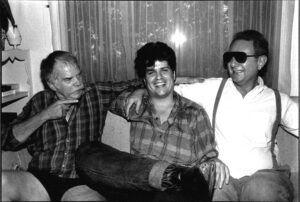
(Andy Milligan, Jimmy M & Hal Borske. Courtesy of Jimmy McDonough)
JM: Well, James, when I was young, I was a human tornado. I had all these obsessions, the ones you mentioned and more. I just wanted to find out everything I could about these fabulous beings. I was still (nominally) living in Hoboken, New Jersey, at the time and going out to L.A. to work for Andy, then coming home. It was like switching between worlds, going from one snow globe to the other. When I was with Gary Stewart, I was in Garyland. When I was with Andy, I was in Andyland. When I was with the Ormonds, I was in Ormondland…I just had a fiendish ability to completely focus on each one while I was in them. None of these obsessions ruled over the other. I knew I’d write a book about the Ormonds. I knew I’d write a book about Andy Milligan. I knew I’d write a book about Gary Stewart. Now, no one was saying they’d publish these books. It didn’t stop me. I was going to do this, will it to happen. I had no training as a journalist whatsoever. I just figured it all out on my own––which was the way for me, right or wrong.
It worked out for you.
JM: Believe me, James, there was no master plan. Other than I had to do these things and had this intense drive. The opportunities just unfolded. And the minute they did it was like, ‘I’m IN.’ When you’re young, you just do it––you’re not capable of thinking twice. Or even thinking. I was like, ‘Oh, that sounds utterly fabulous, when do I leave? Tomorrow? How about NOW?’
What year was the Andy book originally published? My signed copy is the revised 2022 version. You wrote, “To James, one cool cat. Here is a book written in blood.”
JM: Well, Shakey was published in 2002. So, the original Andy book came out in 2001. I was working on Shakey and after I turned it in, it became apparent publication was not around the corner, shall we say. I was in a pit of despair. Mr. Young’s minions had gotten Random House to agree not to publish a book about Neil Young, and not to publish a book by me. My agent had flown the coop. Everybody had turned their backs. I thought, ‘What do I do now? Guess I’ll apply at the Dollar Store.’
So, I’m in the backyard – I had this broken-down shed out back in Amboy, Washington, in the middle of nowhere out in the country near Mt. St. Helens. The landlord’s peacocks used to sit on top of the shed, squawking and shitting on my research. I had all the Andy transcripts tossed in that shack. I didn’t know about transcription machines or any of that, and I’m a one-finger typer. To this day. But back then I’d listen to the tapes on a Walkman and I’d transcribe them by hand. All the interviews were transcribed in cursive within these big Dead Sea Scroll books. Huge, dusty volumes. The detritus from the pages had me coughing.
I’ll transcribe this interview by hand.
JM: I love hearing that. Always good to remain close to the source. Anyway, I’m not feeling too good about life at that particular moment, and I crack open these books. I start reading and they made me chuckle––and remembering this whole other crazy world I’d immersed myself in. I just thought, ‘Fuck it. I’m going to write this book, I don’t care if anybody wants it.’ I wrote the Andy book in a feverish nine-month frenzy, one straight shot. I’d already had years to reflect upon it. Many of the people were dead. A friend of mine, Yuval Taylor, was at a company called Chicago Review Press, and he believed in that book. The advance didn’t pay for the blank cassette tape, but it didn’t matter, because Yuval was game. I’ll never forget it. He went to bat for a book no one in the entire universe wanted. The Ghastly One came out. Then Shakey came out the next year, despite the many attempts to drive a stake through its heart. I just never gave up. I was tenacious. And I was going to hold everybody to their end of the deal.
John Waters called the Ghastly One a masterpiece. You were in Andy’s film Monstrosity.
JM: I doubled for the monster. Andy didn’t have the bread to fly out his longtime star leading man Hal Borske. So, I donned a Fred Flintstone vest, an orange afro wig and Frankenstein boots. We shot the scene in a shed behind Andy’s house—an ancient parking garage, which was full of all these crappy stuffed animals that Wayne—his paramour—had collected. You could barely fit the crew guys in there with all the sad, stained, smelly faux animals piled around us. In the scene, I set the place on fire. And in life! I had a can of gasoline and fire. Believe me, there was utterly no safety involved.
Only one take to shoot it.
JM: Very rarely did Andy go for take two because there was no money. And he had no patience anyway. We nearly burned the joint down. That shed was thick with smoke. Given Milligan’s reputation, I thought, ‘This is great! Andy is gonna kill me. I’m in the gang now!’ We burst out afterward gasping for air. It remains one of the thrills of my life. When I write a book I like—if it’s possible, it’s not always possible––for it to be an action painting. I like to be with the people, see them do their thing. I don’t want it to be a museum piece. I want to capture the subject in all their ragged glory. If it’s possible.
Not all of my books have been like that––and I don’t think the ones that aren’t have suffered for it. In this case, Lou Mishkin— whom Andy detested, and who was the son of Andy’s longtime producer, William—got wind of the book, and wanted to do another movie, thinking the attention to Milligan would make it a smash. I thought it was insane because the days for these movies were long gone. But was I going to be there when this car wreck happened? You better believe it. I got to hang out with Andy and see him almost singlehandedly make a movie his way, which certainly wasn’t like anyone else’s. Priceless. For me, it made the whole shebang come alive. This was after a zillion interviews I’d done with everybody in Andy’s life. Suddenly it became 3D! And at night I’d interview him while we ate ice cream, The Golden Girls blaring in the background. My idea of heaven!
How would you compare the experience of writing about a subject with whom you have a personal relationship (Gary or Andy) versus say, Al Green?
When I write a book and have personal contact with the subject themselves, it’s definitely more exciting for me. And by nature, far messier. A situation I thrive in. If done from a distance, it’s more of a documentary. I try to make up for the difference by boring down on those surrounding the subject even harder (laughs). Just kidding…?
I was not familiar with Andy Milligan until I read your book.
JM: Like most of the people on the face of the earth. If Andy were alive when that book finally came out, I probably wouldn’t be alive (laughs). I would have done the book anyway.
The Russ Meyer book Big Bosoms and Square Jaws was published in 2005. It’s a little more light-hearted than the Andy book. The women in Meyers’ films were raving beauties. The women in Beyond the Valley of the Dolls, Vixen and Faster, Pussycat! Kill Kill! are amazing. Strong women.
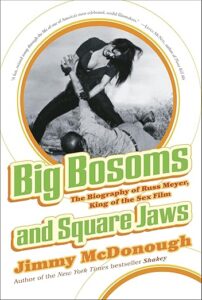
JM: That’s why I wrote that book—the women.
At that point, the Andy and Neil books are out. How did the Russ Meyer book process go?
JM: Well, at that time Shakey was a hot ticket. It got a lot of attention, sold a lot of books. I had publishers sending me flowers saying, ‘Who do you want to write about next? Led Zeppelin?’ I thought, ‘There’s already seventy-two books on Led Zeppelin and I’d rather have nails driven through my eyes.’ So, what did I do? I do another book three people wanted, but because I had Shakey gas in the tank, they let me get away with it. Andy Milligan was like the lowdown, primitive Hasil Adkins of exploitation, so I wanted to do the opposite end––the shiny Beach Boys/Cadillacs-with-fins version: Russ Meyer. Two extremes. Of course, The Exotic Ones was about the third angle I was interested in—the whole Southern, ultra-low budget regional thing. That little triumvirate completed my interest in that strange area of moviemaking. I will not return. I’ve said what I have to say.
At the time Meyer was incapacitated, but I had talked to Russ here and there because I worked for Radley Metzger—the other RM in the exploitation world, but the fancier, pseudo-intellectual end of the sexploitation racket. It became apparent that neither Russ nor his estate were going to help me, which turned out to be a blessing. If Russ were alive, he would’ve sued me to kingdom come for undertaking his biography, I have no doubt. I found a very different story lurking under the lusty, macho image he’d presented in the public arena––the book unearthed his insane view of humanity, his intense relationship with his mother, and the fact that his films weren’t that fun to make…they were like military exercises. Endurance tests for the actors involved. Particularly the women.
Of course, RM’s female superstars were all fascinating, which is really where that book is at. I felt that these dames prevailed against all odds, including the very odd Mr. Meyer. Let’s hear from them. That was a fun one to write. I’d love to update it, a few things need correction, and I left some funny stuff out. At the time I was on the anti-depressant Wellbutrin and somehow, I got confused about the dose, so I was taking double the amount, which gave the book a very jittery flavor. Some critics say I was trying to imitate Russ Meyer. Are you kidding? No way in the world I would attempt that, but the book has a certain, shall we say, manic zaniness that is singular among my books.
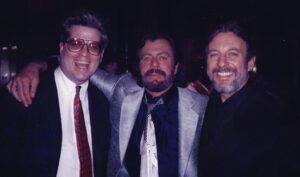
(Jimmy M, Neil Young’s Producer David Briggs and Crazy Horse Guitarist Frank “Poncho” Sampedro. Courtesy of Jimmy McDonough)
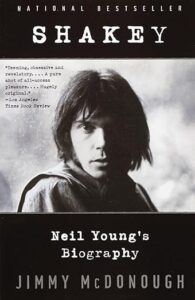
We won’t spend much time on Neil, but I must say when I bought his Archives Volume Two, your descriptions in Shakey of buried songs like “Vacancy”, “Mexico” and “Hawaii”–that people never heard—proved illuminating. I found it great to go back through Shakey listening to those unheard songs.
JM: I still haven’t heard the Archives, James. I’m taking a break from Mr. Young until 2525.
I understand.
JM: One thing that’s been interesting is that people come up with dog-eared copies of the book and say, ‘You laid it all out before the Archives was even created. You accurately hit on all unreleased material no one had ever heard.’ I guess it’s gratifying––not because it’s like, ‘Look at me, the great Sir Jimmy!’ (I can’t even tell you if it’s true––I haven’t even heard the Archives. Like I said, 2525!) But if you’re gonna get into someone’s life work, you want to burrow into everything as deeply as possible––what’s released, what’s not, all of it. I used the same approach for the Gary Stewart book. Shakey and I Am from the Honky Tonks have a lot of similarities in terms of the structure, at least in my mind.
Your Tammy Wynette book, Tragic Country Queen, is one of my favorites. It’s glorious. It’s sad. Your love letters to her after her death provides a tremendous vehicle for the book. You interviewed George Jones for that one.
JM: That was another highlight of my life. I am a George Jones fanatic. In the realm of singers, he’s the ultimate. I’ve told this story before, but in the course of the interview, I asked Jones about DeDoodle the Duck. Which everybody warned me not to do. DeDoodle was one of his several drug-addled alter-egos from the bad old days which consisted of a character known as the Old Man plus a couple of nightmare ducks. He’d talk in these voices. We’re talking for long periods of time. When I asked people who knew him about the ducks, they didn’t want to discuss it because it made them so damn uncomfortable. Jones was the De Niro of duck impressions. He became a duck, OK? It would drive those around him crazy. I had to ask him about it, and he wasn’t fazed at all––in fact, Jones promptly stood up and proceeded to belt out a verse of “He Stopped Loving Her Today” as DeDoodle the Duck. Just for me. It was better than winning a Pulitzer. Now, I would have loved to have written a book about George Jones. This is not to say Tammy was my barn door to Jones, although it turned out that way. Tammy is as lethal as a singer as you can get and an equally monumental entity all on her own. Still, it was a thrill to be around Jones for the ten seconds I was.
I love that Tammy book.
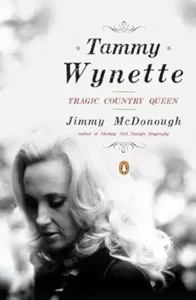
JM: Well, that means a lot. That book is close to my heart. I really felt I was in the grips of her spirit. Hokey things would happen––I’d go into places and a Tammy song would come on, followed by another twenty minutes later, and it’s not like she was a current muzak favorite. Her picture would fall off the wall while I was writing. Spooky things. I was under her spell, that Tammy.
How long did it take to write?
JM: Oh, I don’t know. I remember everybody else’s life, not my own. Do the math between the books. It usually takes me around five years. That’s generally my MO.
Tammy came out in 2010. Your Al Green book, Soul Survivor, was published in 2017. The Al book takes you to Memphis. Al refuses to talk, but you interviewed all the Hi Records musicians. It’s a sharp, dark and brilliant book. Not a lot of comedy in that one. He’s still preaching in Memphis, right?
JM: Oh yeah. Y’know, Al is still singing great. If there was somebody disciplined enough to corral him––not that I think there’s a human being alive capable of that gig—there’s no doubt you could make a great album with the Reverend even now. He’s one of these cats like Van Morrison who can still deliver the goods. Their voices seem eerily immune to age. Somebody should just get a great engineer and tape Al live in his church, doing classic gospel songs with a small band. Every night for two weeks.
That was a book I wanted to give back. Once I got into it, I immediately found out it was very different than story the public knew. Love and happiness it wasn’t. It really gave me the heebie-jeebies, that one. Of course, I went into it with great admiration for the Reverend’s singing. One of the absolute seminal singers of any age or genre. This is what motivates all my books. They come from a deep love for the artist and their work.
But this tale was rather grim. People were scared to talk to me. They wanted money, which is an understandable response. I don’t pay for information, unfortunately. Eventually just about everybody talked. When I think about that book, I think about Weegee (pseudonym for the tabloid photographer Ascher Felig). It has a…crime-scene flavor. That might be extreme way of putting it (laughs), but you get my drift. It was a lean and mean documentary, shot in high-contrast black and white, narrated by Jack Webb. In the end, I felt so strongly about Al’s musicians, they gave so much to Green––and to me. If I didn’t tell their stories, those cats would be gone, and the record of their experiences would disappear like smoke rings. Some of them have left the planet already. I love these people––and I wanted to tell that end of the tale just as much as Green’s story. After all, they played a central role in his greatness. That was a positive motivation for me to finish the book. It’s also the stuff they always want to cut out of my books first (laughs).
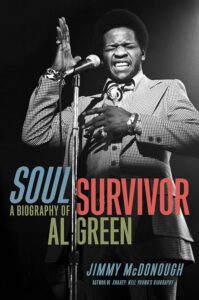
You had access to the FBI files surrounding the disturbing Cream of Wheat incident in Al’s life. A turning point…
JM: Yes. Not that anyone will ever know the full truth of that event. There’s only one witness left alive (that I know about, anyway), and I consider him an unreliable narrator.
After the Al book, you wrote tremendous articles for byNWR about Wayne Cochran, Frankie Miller, Estus Pirkle, and the “Dames of Dale Berry.” That era leads into your book about the Ormond Family, The Exotic Ones in 2022.
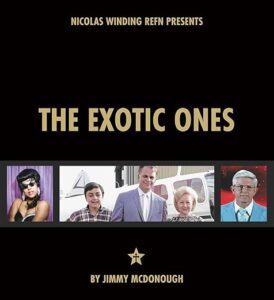
JM: Such a pompous monolith of a book. Physically speaking, anyway. It weighs nine pounds, for God’s sake! You could flatten a rabbit with The Exotic Ones. I wish it existed in a size suitable for actual reading, but nobody asked me. I do like the layout, which I had a big hand in.
Your books provide a wellspring of arcane facts that allow lazy hipsters to discover these artists or unknown details about them and pretend they arrived at the party early. I’ve seen it.
JM: Eh, it always happens that way. The maniacs who really love the stuff yap about it for so long and so hard that it eventually breaks through to bigger, tamer mainstream acceptance. About four years after that it gets a paragraph in the New York Times. It’s the way of the world. But it is amusing to me how these things have their own little cults now. If I had any part in that for any of these folks, great.
All I can tell you is that I’m motivated by sharing what I know about these wondrous individuals with the world. They moved me, so I want to move you. That means I barge into their lives. Now, whether they’re happy with that or not, I guess you’d have to ask them. For better or worse, I’m a singular presence and I do things my way. I have great ambivalence about it all. I’ve wondered, ‘Why am I so consumed by this? Is it a healthy experience for those involved? Or am I just a…psychopath?’ (laughter) Thankfully, plenty of good has come out of these books.
I’m sure there’s a little guilt about some things.
JM: I’ll tell you a story. I wrote about Jimmy Scott for the Village Voice, nobody had profiled him in depth ever before. One of the greatest jazz singers—and I’m completely ignorant when it comes to jazz. Jimmy Scott had a searing edge in his voice that was not unlike his pal Little Willie John. For me, the intensity in his delivery hooked me immediately…I used to go to this little record store in Times Square. It was mostly 12-inch hip hop records. In the early days, I was kind of dabbling in that and knew some of that action. It was near The Deuce, where I’d go to see movies. There was this album Very Truly Yours—a Savoy Records reissue. Something about the cover grabbed me, which was Jimmy at a music stand, looking aristocratic as usual—now, I had never heard of the guy or even a mention of his name, and I just bought the album on the spot. And then I played it! Over and over and over––it was so hypnotic and otherworldly it blew the back of my head off. So, of course, I had to find out about Jimmy. I did this long story about him for the Voice, and within that story, I revealed that he had this condition from birth called Kallmann Syndrome, which wreaked havoc on his life, not to mention his hormones. But it also gave him this very singular, very high, somewhat feminine voice. With a knife-like edge.
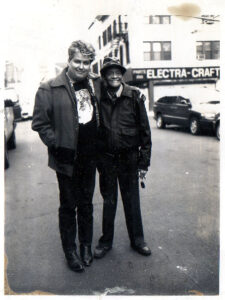
(Jimmy M and Jimmy Scott. Photo by Melodie McDaniel)
Jimmy’s brother took hormone treatments to compensate for what he felt the condition had taken from him. Jimmy refused. He told me, ‘If I did this, I probably wouldn’t have my voice.’ And he’d been subjected to rumors for years like ‘Oh, he’s a junkie.’ I had people tell me he was actually a woman. And knucklehead-on-a-white-horse me thought, ‘Oh, the truth is the only way to cut through all this crap.’ Jimmy had never revealed his condition to the world. Just before publication I shared the galleys with Jimmy and told him, ‘Listen, if you can’t live with this, I’ll break into the Voice tonight and smash everything to do with the story.’ How I was going to pull that one off, I do not know, but let me tell you, I was dead serious and crazy enough to try it at the time. Jimmy just said, ‘Let it go, babe.’
And then, much later, he went on the Tom Snyder show, and this guy was absolutely unrelenting in his pursuit of what this syndrome had done to Jimmy––he was basically saying, ‘Pull down your pants and show America what you got.’ That was exceedingly painful to watch––I thought, ’Had I not written that article, this would not be happening to Jimmy.’ So, again––ambivalence. Once you put the information out there, people are free to use it, sometimes in a less than thoughtful manner. I’ve tried to not let that stop me, even though that end of it is worse than ever before. I actually changed my name to Jimmy in Jimmy Scott’s honor. Before that, I was a Jim. True story, Your Honor.
In 2010, when I was writing for Swampland…
JM: Oh, yeah. I remember. I used to read your stuff there. You did some excellent interviews.
Thank you, Jimmy. I discovered Gary Stewart from reviewing the Grandma’s Roadhouse album. In your introduction to the Gary Stewart book, you wrote “No doubt I disappointed Gary as a friend, but I will not fail him as a biographer.” The reader immediately feels the weight of his story. It’s a masterpiece. And we’re back in Florida. It gets hot in Fort Pierce…
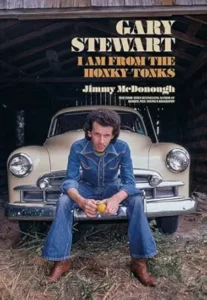
JM: In more ways than one.
Would you estimate you’ve done more publicity interviews for the Gary Stewart book than all your other books combined?
JM: I would say that’s true. This Gary book was so personal to me, and the guy who published it––Chris “The Champion” Campion––went so far out on a limb that I’ll do anything to promote it, including a few crass things I really didn’t want to do (chuckles). I’m pretty much a phantom, I live in the shadows. Although, as it turns out, I do somewhat enjoy the role of playing a $1.98 huckster (laughter).
The thing is, this Gary book touched some sort of nerve. I’m absolutely thrilled by the response to it. Really overwhelmed. I never would have thought people would care so deeply about this book.
Your fans are very excited for you. I couldn’t wait to get my hands on it. In the Acknowledgements of the Gary book you wrote: “The infidels that occupy current day publishing would not put this book out.” That’s discouraging to a writer and a fan of your work. Didn’t a publisher tell you ‘Country music fans don’t read’?
JM: Yeah, and I got notices back saying things like, ‘I think this might be your best book, but we can’t make a dime with it. Sayonara.’ Publishers were not interested. They didn’t even want to read it. My agent—bless him—went to the ends of the earth trying to find a publisher. Literally, no one wanted this book. And, had they wanted it, they would not want a 500-page-plus version, I can guarantee you that. Again, my mission is to tell the whole tale and that is that. I thought it would never see the light of day.
Luckily, this guy Campion, a fellow writer––he’s English, don’t hold that against him—said, ‘Look, if no one else wants it, I’m starting a publishing company (Wolf & Salmon), and I’ll take a shot at it.’ Not only did he do that—he designed the book himself, not only the knockout cover but the interior layout. And he let me do the audiobook myself, a dream come true. It’s the most Jimmy M book that will ever exist––well, there’s one other one that may be coming that will be more Jimmy by default, but that’s a secret.
Anyway, it all worked out. And believe me, there were obstacles along the way with Gary Stewart: I Am From the Honky-Tonks. This one was just unbelievable. Roadblocks in every direction. I really thought the book would finish me before I finished it. But it exists. Truly a miracle. I gaze over at it now and smile. Yes––against all odds, it exists. But I’m not opening that book again. I changed it right until the very last minute. It really drove me cuckoo. And if I open it again I’ll want to change something! In fact…forget it.

(Photo of JM by Natalia Wisdom McDonough)
I felt irritated to discover a few weeks after your Gary book was published, a fake AI Gary Stewart book by “Jimmy Karl” was being sold online. So fucking obscene. You spend 40 years writing a book, and a fake appears in one afternoon. But due to human revolt the fake book was removed.
JM: I gotta tell you, pal, AI’s coming for all of us. The future’s here, like it or not. My pal Lucy said, ‘One of the worst things about AI is that it’s going to convince a whole lot of untalented people that they can do it, too.’ That made me laugh. And cry. It’s the modern world. I can’t sit here and be Grandpa Simpson, throwing useless rocks, but do I want anything to do with it? No way, Jose. It’s one more soul-crushing thing in this $1.98 world. I’m just lucky that the powers that be accepted my rationale why that fake book shouldn’t exist, and finally agreed to yank it down. I thank all the people who left that atrocity one-star reviews (laughs)! After all this time, labor and insanity to get this book to physically exist, was it a stunner to witness some con artist hastily throwing my work into an AI blender it to churn out a crass nothingness version? You bet. But that’s been deep-sixed to Davy Jones’ locker, where it will hopefully remain.
The Gary book took the longest to write. Was it the most difficult to write?
JM: Yeah, I would say by a country mile. There were times I thought, ‘Screw it, I’m just not finishing this’—parts of the tale were so grim that I kept putting it off. I really felt for all of us still here that had endured the loss. And I was only a friend of Gary’s. I didn’t want to put everybody close to him through additional torture. I still have feelings about that, because more than any of my books, I let it rip completely with this one. I figured Gary deserves the best. And the best––when it comes from me––is a certain experience (chuckles darkly). I still lie awake at night thinking: ‘Did I do Mr. Stewart justice?’ I don’t know. I’ll never know. I gave it my best shot. This book grabbed ahold of me like no other, not even Tammy. It’s still got me. Probably never gonna let me go. And that’s okay. Fair deal.
You did it justice. The book exceeds all the rigid standards of excellence.
JM: Gary was the realest deal. Utterly unique. Singular talent. Funny as hell, boy… If the book succeeded—I credit him. He’s such a compelling individual. In the end, we just want some human contact…Gary was painfully human, like so many of us. He had no filter. And no protection, really. Gary gave his all, and then gave some more. No doubt this contributed to the utter abandon of his art.
Your Ain’t No Grave tour has been a great success– Brooklyn, Louisville, Nashville, Austin, and Los Angeles. You have a Chicago date in July. Will there be more?
JM: I don’t know. It’s been a million laughs. Some of my very talented friends have come along to join the circus, which is immensely satisfying. The response from people has been unreal. You know how it is––you’re toiling away on this thing, and you’re wondering if anybody from here to Antarctica will even care. I got very emotional going to Kentucky (Gary Stewart’s childhood home). It was just a big ol’ fluorescent-lit library full of regular folk, and they were so into it. Quite the experience. It’s all been great, frankly. No whining from me, only gratitude.
You’ve said Gary is your last biography.

(Photo by Natalia Wisdom McDonough)
JM: Yeah, right.
I heard somewhere you may be working on a Jack Nitzsche book?
JM: Well, that’s an autobiography. A different animal. It will be in Jack’s voice. It’s something I have to do. We’ll see if I pull it off. I promised Jack. That carries a lot of weight. I feel bad it hasn’t happened yet. There are other things I want to write about––a book I want to do with Natalia Wisdom (my wife) called 500 Records, which could be quite entertaining, at least from my perspective. I keep saying this hoping it will happen, but I’d love to do a volume containing all my articles, alongside stories that never saw the light of day. I spent a tiny amount of time around both Jerry Lee Lewis and Bryan Ferry…there would also be a long piece of writing on J.J. Cale , who I’ve been obsessed with most of my life. I’d love for all this material to see the light of day. Less unfinished business nagging my dreams. We’ll see if it ever happens.
My fingers are crossed.
JM: And there’s a fiction thing that connects all this stuff we’ve talked about. That’s probably closest to my heart and something I’ve worked a lot on—it’s just a matter of if I have the intestinal fortitude to actually do it. I hope it’s not one of these things I talk about but never finish. That would be…highly unattractive.
Y’know, I’m getting up there. I see a hole in the ground with my name on it (laughs). As far as the biographies, I feel I’ve taken it as far as I can take it. There are no obsessions left in me quite like the previous ones. I did what I set out to do, and I feel the Gary book finishes what I set out to do. I don’t know if I could improve upon it. Having said that, Mr. Calemine, tomorrow I may decide to do a ten-volume set on the life of Rip Taylor. You never know with me.
Last question. I’m a card-carrying Bob Dylan fan, and I know Bob was a Gary Stewart fan. Bob met Gary when Bob toured with Tom Petty. You wrote that Bob told Gary he played “Ten Years of This” over and over. Do you have any more Dylan stories for me?
JM: No, unfortunately, I don’t. I tried eight ways from Sunday to get Dylan for the Gary book. Weirdly enough, the interview Gary did with me where he talked about meeting Bob is lost. That does not happen with me. A very odd occurrence. I remember during Shakey Bob tentatively agreed to talk to me after a hundred asks. I was out on the road and there came a phone call from a gruff, mumbly person who didn’t leave their name. I’m convinced that it was Dylan. Poetic justice, maybe. Nothing more, to my great regret. I wish he would’ve taken ten minutes to yap about Gary, but it never happened. His loss!

(Jimmy at Luna Park. Photo by Natalia Wisdom McDonough)
Jimmy, I appreciate you talking to me.
JM: See you down the road, Sir James.
RELATED CONTENT
The OFFICIAL Jimmy McDonough Website
Gary Stewart: I Am from the Honky Tonks
That Fabulous Film-Making Family from Music City, USA-The Ormond Family
Tammy Wynette: Tragic Country Queen
A personal thanks to Mr. Jimmy McDonough…